If you’re new to cryptocurrency, finding and using a platform similar to Binance—often referred to as a “Bitcoin exchange”—can feel overwhelming. These exchanges allow you to buy, sell, and trade digital assets like Bitcoin, Ethereum, and hundreds of other coins. Understanding how to use them effectively is the first step toward participating in the crypto market. This guide breaks down the core steps, from account setup to placing your first trade, focusing on exchanges that function like Binance.
1. Choosing a Reliable Exchange Similar to Binance
Before you can start trading, you need to select an exchange. Binance is one of the largest, but many alternatives offer similar features, such as Coinbase, Kraken, KuCoin, or Bybit. When choosing, look for key features: strong security measures (like two-factor authentication), a wide range of cryptocurrencies, high liquidity, and user-friendly interfaces. Most importantly, confirm the exchange is legally compliant in your region. A trustworthy platform will have clear fee structures and transparent policies.
2. Creating and Verifying Your Account
Once you choose an exchange, the first step is registration. You’ll typically need to provide an email address and create a strong password. However, to trade on a Binance-like exchange, you must complete identity verification (KYC). This process usually requires submitting a government-issued ID, a selfie, and proof of address. Verification can take from a few minutes to several days, depending on the platform. Without verification, your ability to deposit, trade, or withdraw funds will be severely limited.
3. Depositing Funds to Start Trading
After your account is verified, you need to deposit money. Most exchanges allow deposits via bank transfer, credit or debit card, or by sending cryptocurrency from another wallet. If you want to buy Bitcoin directly with fiat currency (like USD or EUR), using a card is the fastest method but often incurs higher fees. Bank transfers are cheaper but slower. If you already own crypto, you can deposit it by pasting your exchange wallet address into the sending wallet. Always double-check the network and address to avoid losing funds.
4. Placing Your First Trade: Spot Trading
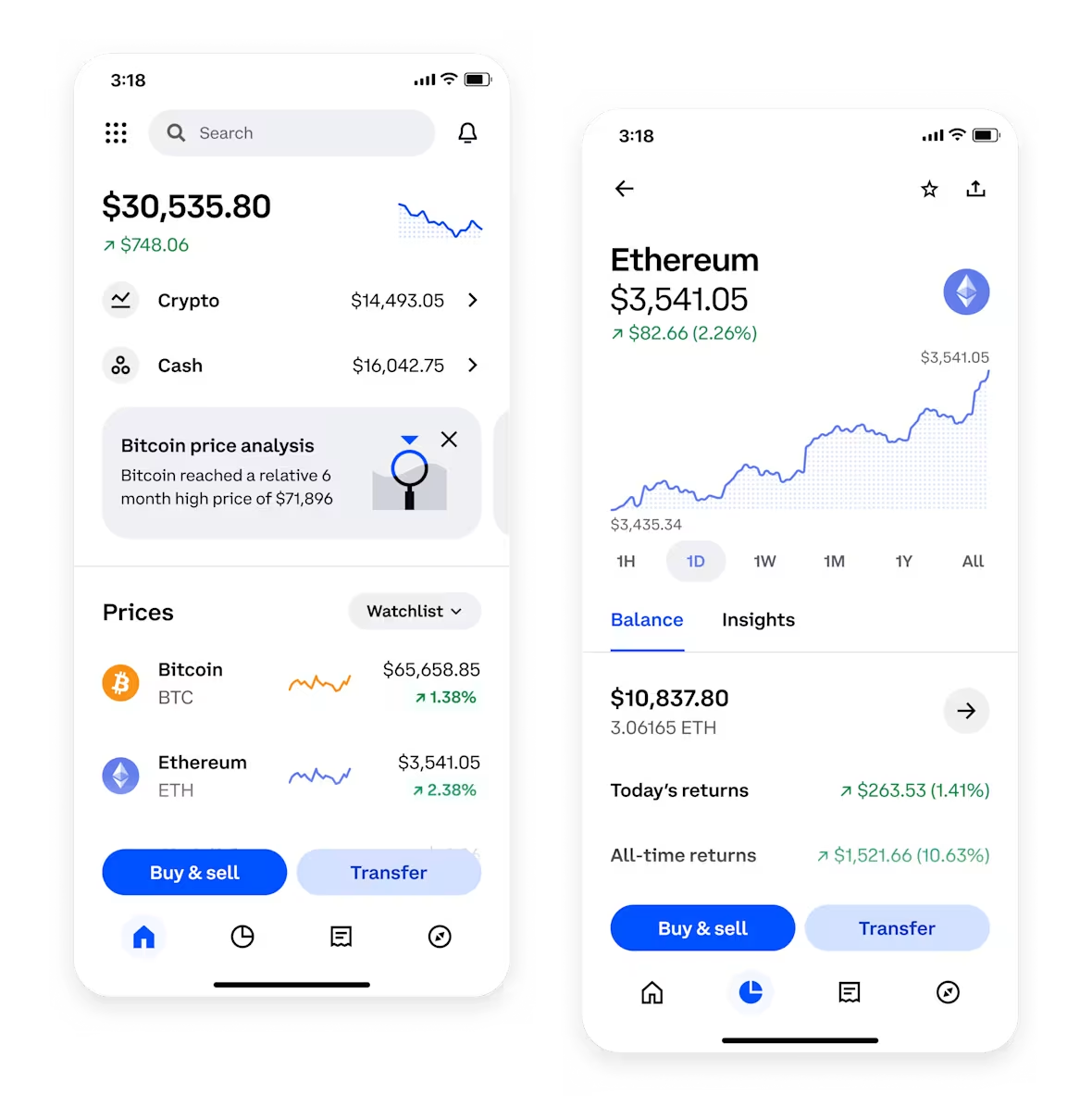
The most common trading type on exchanges like Binance is “spot trading.” This means you buy or sell a cryptocurrency at the current market price. To place a trade, navigate to the “Trade” or “Spot” section. You’ll see a price chart, an order book, and a trading panel. For beginners, using a “Market Order” is safest—it executes instantly at the best available price. Enter the amount of Bitcoin you want to buy, review the total cost including fees, and confirm the transaction. The Bitcoin will then appear in your exchange wallet.
5. Understanding Order Types: Limit vs. Market
To trade like a pro, learn the difference between order types. A “Market Order” buys or sells immediately at the current price. A “Limit Order” lets you set a specific price at which you want to buy or sell. For example, you can set a limit order to buy Bitcoin at $30,000. The order will only execute if the market price drops to that level. This gives you more control but requires patience. Most Binance-like exchanges also offer “Stop-Limit” orders for risk management, which automatically sell your holdings if the price falls to a certain level.
6. Security Practices You Must Follow
Security is non-negotiable on any Bitcoin exchange. Always enable Two-Factor Authentication (2FA) using an app like Google Authenticator, not SMS. Avoid keeping large amounts of crypto in the exchange wallet—transfer most of your holdings to a personal hardware wallet (like Ledger or Trezor) for safekeeping. Also, review your exchange’s withdrawal whitelist feature, which allows you to pre-approve wallet addresses. This prevents hackers from sending your funds to an unknown address even if they access your account.
7. Withdrawing Your Bitcoin to a Personal Wallet
Once you own Bitcoin, you may want to move it off the exchange. To do this, go to the “Withdraw” section. Paste your personal wallet address (from a software or hardware wallet) and enter the amount. The exchange will charge a small network transaction fee. Confirm the withdrawal via email or 2FA. Note that withdrawals can take from a few minutes to an hour depending on blockchain congestion. Never send crypto to an address that doesn’t support the exact asset (e.g., sending Bitcoin to a Bitcoin Cash address).
8. Exploring Advanced Features (Optional)
After you master basic trading, you can explore advanced tools often found on Binance-like platforms: futures trading, staking, and margin trading. Futures allow you to speculate on price movements without owning the asset, staking lets you earn passive income by locking up your coins, and margin trading amplifies your buying power using borrowed funds. However, these features carry significant risk and are best left for experienced users. Start with spot trading and gradually learn about these tools.
9. Common Mistakes to Avoid
New users often fall into traps. Avoid FOMO (fear of missing out) and buying at the peak of a price spike. Never share your private keys or login details. Beware of phishing websites that look like your exchange’s login page. Also, check the exchange’s support for your region—some platforms restrict services in certain countries. Finally, always read the fee schedule; trading, withdrawal, and deposit fees can add up quickly, especially when using credit cards.
10. Final Checklist for Using a Binance-Like Exchange
To summarize, your action steps are: 1) Choose a reputable exchange with good security. 2) Complete KYC verification. 3) Deposit funds via a low-cost method. 4) Start with a simple market order to buy Bitcoin. 5) Activate all available security features. 6) Withdraw your crypto to a personal wallet for long-term storage. 7) Trade only what you can afford to lose. By following this structured approach, you can safely and effectively use any Bitcoin exchange similar to Binance, whether you are a casual buyer or a regular trader. The key is patience, research, and consistent security practices.